


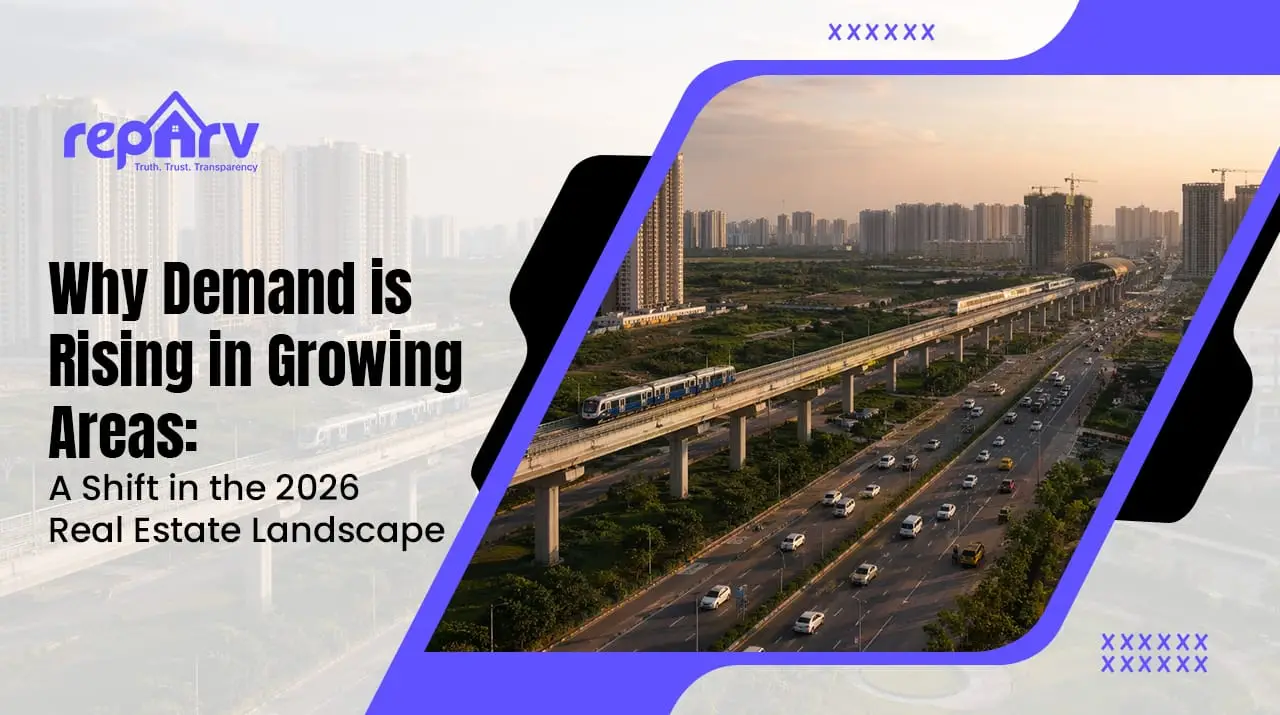
If you have recently been out for a spin in your car towards the peripheries of your city, you will notice what is happening: Skyscrapers are everywhere, new tarmacs are being laid, and signs that say "Coming soon" indicating luxury townships in the works are springing up where there used to be only empty fields.
There is no mystery as to why this is happening. By 2026, the famous rule of thumb called "Location, location, location" needs to be modified into "growth corridor." No matter whether you are buying your first house or making an investment as an experienced businessman, knowledge of why demand is rising in growth areas can mean significant returns for you.
In this blog, we shall break down the complex aspects of the real estate business to understand the real reasons behind why people are moving away from cities to find new places to live and invest.
The Infrastructure Catalyst: Connecting the Dots
Perhaps the most obvious reason for the shift in the demand pattern is due to infrastructure development. Land is essentially just land until a 6-lane highway or Metro railway track comes through it.
As early as 2026, the "Flyover Effect" can be clearly observed. Once the government decides on an important project like the construction of an international airport or a rail track to connect two places fast, real estate market trends skyrocket immediately.
- Time Spent on Commuting: Today, people do not mind living 30 kilometres away from work because they know that if there is proper connectivity, they can get to work within just 20 minutes.
- Demand in New Locations: With the core areas of the cities having become saturated, demand starts moving towards peripheral residential locations.
The Search for Better Pricing and Long-Term Value
Let’s face the facts – purchasing a 2BHK apartment in prime location today means paying excessively. It is usually just not feasible for most young adults or families.
Affordable real estate opportunities have started emerging in developing regions. Buyers get the opportunity to purchase a spacious 3BHK unit along with modern amenities for less than the cost of a tiny studio apartment in an established location. However, the capital gain opportunity in this case cannot be overlooked.
An investor buys into an asset whose price has already reached its peak when buying in an established region. On the other hand, by investing in a developing region, they are essentially "buying the future". As educational institutions, hospitals, and shopping malls establish themselves in the area, the value of the property skyrockets. This makes real estate investments in 2026 more concentrated in Tier-2 cities and micro-suburban markets.
The Quality of Life Upgrade: Space and Serenity
As post-pandemic effects continue to shape preferences, there has been a shift in what constitutes "a good home". People are tired of the hustle and bustle of the cities, and there is a huge demand for green housing areas and gated residential estates that provide:
- Bigger Living Areas: More space for work and hobbies.
- More Air Circulation: Better AQI and recreational parks.
- Smart City Infrastructure: While the old parts of the city were not planned at all, the new zones are constructed using smart city infrastructure, with improved drainage systems, under-road power lines, and spacious roads.
Commercial Migration: Jobs Follow the People
There isn’t just an increase in demand due to living needs, but employment requirements, as well. There is a clear shift of companies’ IT centres to the peripheries due to high rental costs. When a "Grade A" office park is launched in a developing area, there will be thousands of workers who require housing close by. This will create a chain reaction of demand for residential property development. By 2026, the "Satellite Cities" trend has shown us that success does not necessarily have to happen from within the CBD.
The RERA Factor: Security in the "New"
Before the implementation of stringent measures under RERA, investors used to shy away from investing in undeveloped areas due to the possibility of "ghost projects". However, since RERA came into effect, there is now a significantly lower risk of delays in such projects.
Now that the investment environment is secure, developers can safely invest their money in under-construction properties located in emerging locations. This measure has attracted new investors who were once wary about the investment process.
Decoding the Investment Potential: Why Early Entry Matters
It has been observed that early movers in the real estate market tend to gain the most from their investments. This concept is popularly called the "Early Mover Advantage."
When considering the rise in property prices of those places that were "peripheries" 5 years back, their growth has been around 100% or even higher. Now, in 2026, there are numerous high-growth real estate corridors where the starting price is low; however, the triggers—such as upcoming technology parks or logistics centers—indicate significant growth in the next 36 months.
How to Identify a High-Demand Growing Area
Not all "developing" areas are money-spinners. There are certain factors that should be analysed:
- Public-Private Partnerships (PPP): Any collaboration between the government and the private sector to develop educational or healthcare institutions?
- Accessibility: Measure the distance from the nearest highway or airport.
- Industrial Activity: Is there any presence of warehouses or manufacturing units? (Guarantees constant demand for rentals).
- Reputed Developers: Any major property development firms investing in the region? Let's follow the “big fish.”
The Future of Urban Expansion
As we move into 2027 and further ahead, the phenomenon of urban sprawl will continue to gain momentum. With "work from anywhere" policy becoming more common, combined with significant investments being made through the PM Gati Shakti mission and others, the lines that distinguish "city" from "suburb" will be blurred.
It's a demand based on a value equation. The people who once prioritized "where they lived" are now giving precedence to the “lifestyle.”
Summary: The Takeaway for 2026
The increase in demand in emerging markets is not an anomaly but a structural change. The reason? Improved connectivity, low property rates, and potential appreciation. All of this combined makes these markets highly attractive.
If you have been waiting for the "right moment" to invest, take a look around your cities' fringes. That is where the growth lies.
Whether you are looking for high-appreciation plots or your dream home, Reparv simplifies your search with expert insights and verified listings. Start your investment journey with Reparv today and secure a property that grows with the future.