


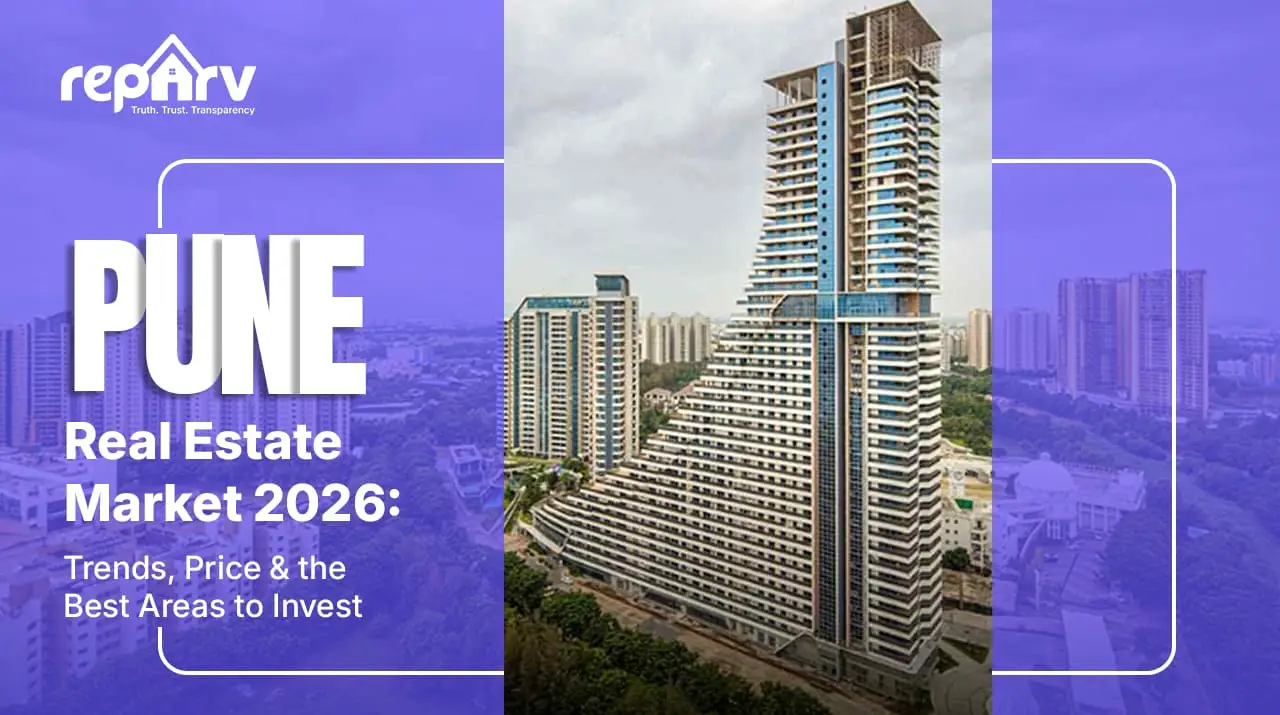
Introduction: A Market Moving Towards Stability
The Pune real estate market 2026 has clearly transitioned into a structured and demand-driven ecosystem. Unlike earlier cycles that were influenced by speculative activity, current growth is supported by end-user demand, infrastructure expansion and sustained employment generation.
Compared to cities like Mumbai and Bengaluru, Pune offers a more balanced mix of affordability and growth, making it one of the most stable residential markets in India.
The key shift is evident: property price appreciation in Pune is no longer uniform across the city. Returns now depend heavily on selecting the right micro-market.
Pune Real Estate Market Snapshot (2026)
| Indicator | Value (2026) |
|---|---|
| Average Property Price | ₹11,500 – ₹13,000 per sq. ft |
| Annual Price Growth | 8% – 11% |
| Rental Yield | 3% – 6.5% |
| Registration Growth | ~10% – 15% YoY |
| Demand Segment | 2 BHK and Compact 3 BHK |
The current pricing levels reflect average property prices in Pune that are stable and suitable for long-term investors seeking predictable returns.
Micro-Market Property Price Analysis
The Pune property market behaves differently across micro-markets depending on employment hubs, connectivity and supply levels.
Key Area-Wise Property Prices (2026)
| Area | Avg Price (₹/sq.ft) | Rental Yield | Market Position |
|---|---|---|---|
| Koregaon Park | ₹15,500 – ₹18,000 | 3% – 4% | Premium / Saturated |
| Kalyani Nagar | ₹14,000 – ₹16,500 | 3.5% – 4.5% | Stable Premium |
| Baner | ₹12,500 – ₹14,500 | 4% – 5% | High Growth |
| Balewadi | ₹11,500 – ₹13,500 | 4% – 5% | Emerging Premium |
| Hinjewadi | ₹8,500 – ₹11,500 | 5% – 6.5% | Rental Hotspot |
| Wakad | ₹9,000 – ₹11,000 | 4.5% – 5.5% | Growth Corridor |
| Kharadi | ₹11,500 – ₹14,000 | 4% – 5.5% | IT-Driven Demand |
| Tathawade | ₹7,500 – ₹9,500 | 4% – 5% | Emerging |
| PCMC | ₹6,500 – ₹9,000 | 4% – 6% | Fast Growth |
| Undri / Pisoli | ₹6,000 – ₹8,500 | 3.5% – 4.5% | Oversupply |
This highlights that property prices in Pune per sq ft vary significantly across locations, with stronger demand in IT-driven corridors.
High-Price vs High-Growth Markets
Premium Markets
Areas such as Koregaon Park and Kalyani Nagar represent the high-end real estate in Pune, where pricing is already elevated. These locations offer stability but relatively lower growth potential.
They are best suited for investors focused on long-term wealth preservation.
Growth Corridors
Baner, Balewadi, Kharadi, Wakad and PCMC are among the fastest growing areas in Pune real estate. These markets are benefiting from infrastructure upgrades and IT expansion.
Investors targeting real estate investment in Pune for capital appreciation are increasingly focusing on these zones.
Rental Yield Markets
Hinjewadi, Kharadi and Wakad are known for offering high rental yield areas in Pune, driven by strong demand from the IT workforce.
These markets are ideal for investors prioritizing steady income generation.
Where Should You Put Your Money?
The "High Price" Champions (For Luxury Seekers)
If budget isn’t a constraint and you’re looking for prestige, Koregaon Park and Kalyani Nagar remain the undisputed kings. These areas have the most expensive apartments in Pune. You’re not just buying a home here; you’re buying a lifestyle—proximity to the best breweries, boutiques, and the upcoming Riverfront Development project.
Kothrud also remains a massive favorite for the local Puneri crowd, often called the "Capital of Pune." Its prices remain high because of the limited supply of new land and its deep-rooted cultural value.
The "High Growth" Hotspots (For Investors)
If you want to see your money grow, look toward East Pune and the PCMC belt.
- Kharadi: With the EON IT Park and World Trade Center, Kharadi has become a powerhouse. The expansion of the Metro and better connectivity to the airport makes it one of the best places to invest in Pune 2026.
- Hinjewadi & Mahalunge: The "Maan-Mahalunge Hi-Tech City" is the new talk of the town. While Hinjewadi Phase 1 is established, the newer phases and Mahalunge offer new residential projects in Pune at prices that are still accessible for mid-career professionals.
- Dhanori & Lohegaon: These are the dark horses. Being close to the airport and Viman Nagar, these areas offer much better value for money compared to their glitzy neighbors.
Infrastructure as the Primary Growth Driver
Infrastructure is now the most important factor influencing the growth of Pune real estate market.
Key developments such as the Pune Metro, Ring Road and improved connectivity to Mumbai are enhancing accessibility and driving demand in peripheral locations.
Areas like Wakad, Tathawade and PCMC are expected to see continued growth due to their proximity to these developments.
Demand and Supply Trends
The Pune housing market trends indicate a balanced demand-supply scenario with location-specific variations.
High-demand areas such as Kharadi, Baner and Hinjewadi continue to see strong absorption, while markets like Undri and Pisoli face higher inventory levels.
This creates opportunities for both premium pricing and value-based buying depending on the location.
Changing Buyer Preferences
Buyer preferences in the Pune residential real estate market have evolved significantly. There is a clear shift towards ready to move flats in Pune, larger configurations and projects with modern amenities. Buyers are also prioritizing developer credibility and timely delivery.
Role of Commercial Real Estate
The strength of the Pune property market is closely linked to its commercial growth. The city continues to attract IT companies and global capability centres, which supports housing demand and ensures long-term stability.
Investment Strategy for 2026
A focused strategy is essential for property investment in Pune 2026. For capital appreciation, Baner, Kharadi and PCMC offer strong potential.
For rental income, Hinjewadi and Wakad remain reliable.
For wealth preservation, Koregaon Park and Kalyani Nagar are preferred.
Risks to Consider
Investors should also evaluate real estate investment risks in Pune, including oversupply in certain areas, interest rate fluctuations and delays in infrastructure projects. These risks are localized and can be mitigated through careful market selection.
Future Outlook (2026–2030)
The Pune real estate market forecast suggests steady and sustainable growth. Property prices are expected to rise moderately, supported by infrastructure and employment expansion. Rental demand will continue to remain strong in IT-centric areas.
Real Advice for Real Buyers
If you’re looking at the Pune real estate forecast, don’t get blinded by the fancy brochures.
- Check the Water Supply: This is a classic Pune problem. Always ask if the society relies on tankers or has a legitimate PMC/PMRDA connection.
- Verify RERA: Never, ever skip checking the RERA registration of a project. In 2026, the rules are stricter, but "due diligence" is still your best friend.
- Rental Yields vs. Appreciation: If you want monthly income, focus on flats for rent in Hinjewadi or Kharadi. If you want long-term wealth, look for upcoming areas like Uruli Kanchan or Shirwal for land.
Conclusion
The Pune real estate market in 2026 is robust, but it’s also becoming more segmented. The gap between "premium" and "affordable" is widening. However, for a city that balances a massive industrial base with a thriving tech scene, Pune remains one of the safest bets for real estate in India.
Whether you’re looking for a 2 BHK flat in Wakad or a luxury villa in Baner, the key is to move fast but with your eyes wide open.
If you're planning to invest in the Pune real estate market 2026, the right property and timing can significantly impact your returns. Connect with Reparv today to discover curated pre-launch deals, verified projects, and high-growth investment opportunities across Pune.