


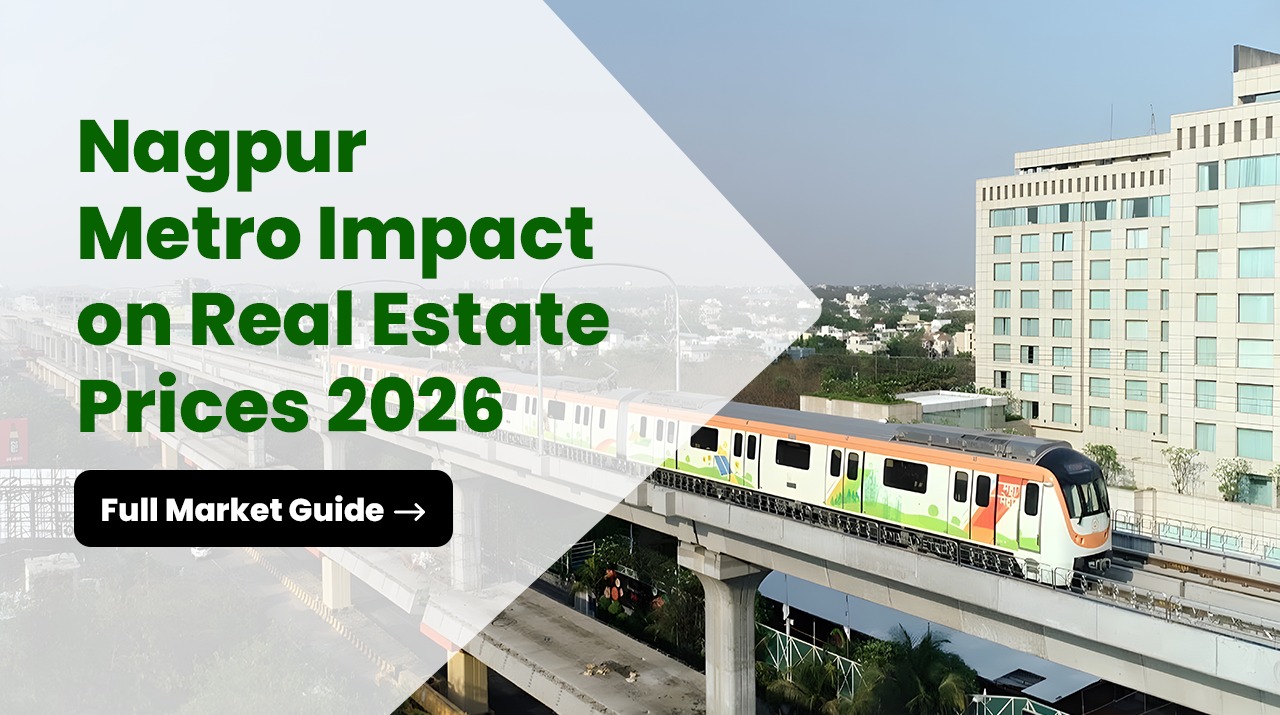
The arrival of Nagpur Metro has become one of the biggest game-changers for the city’s real estate landscape. From improved mobility to increased demand for metro-connected locations, the metro has reshaped how investors, homebuyers, and developers look at Nagpur’s property market. As connectivity becomes the most important factor for modern urban living, the metro is directly influencing residential prices, commercial growth, rental demand, and long-term investment potential across multiple areas. This detailed guide explains how the Nagpur Metro has impacted property values and which areas are witnessing the highest appreciation.
Why Metro Connectivity Increases Property Value
Metro connectivity naturally boosts real estate prices because it improves convenience, reduces travel time, and increases desirability of the surrounding areas. In Nagpur, the metro connects major employment hubs, educational institutions, hospitals, residential colonies, and commercial districts. This makes living and doing business near a metro station extremely attractive for both buyers and tenants.
Key reasons metro boosts real estate value:
- Faster transportation across the city
- Higher demand from tenants and working professionals
- Reduced dependency on private vehicles
- Better resale potential due to improved accessibility
- Growth in retail and commercial activity near stations
Nagpur Metro Corridors and Their Real Estate Influence
Nagpur Metro operates through two major lines that connect almost every crucial part of the city. These lines are not only improving connectivity but also creating new real estate hotspots.
1. Orange Line (North–South Corridor)
This line connects Sitabuldi to Khapri Airport and passes through some of the fastest developing residential areas. The ease of reaching the airport, railway stations, and commercial hubs has significantly increased the demand for both residential and commercial spaces along this stretch.
2. Aqua Line (East–West Corridor)
Covering Lokmanya Nagar to Prajapati Nagar, this corridor runs through important localities such as Dharampeth, Ambazari, and Subhash Nagar. The aqua line has made commuting easier for students, office-goers, and daily travelers.
Areas benefitting the most:
- Hingna
- Ambazari
- Sitabuldi
- Dhantoli
- Jaiprakash Nagar
- Subhash Nagar
- Airport South
- Lokmanya Nagar
Impact of Metro on Residential Property Prices
Residential property demand has increased considerably near metro-connected zones. Families now prefer locations that make daily commuting easier, while tenants look specifically for flats that offer walkable distance to metro stations. This trend has created strong rental as well as resale demand.
Effects on residential real estate:
- Rise in apartment prices near metro sections
- Higher rental yield for 1 BHK and 2 BHK flats
- Growing demand in premium areas like Dharampeth & Ramdaspeth
- More developers launching metro-facing projects
Some areas, especially around Hingna and Besa, have seen property appreciation ranging between 12–25% in the past three years.
Impact on Commercial Real Estate
Commercial real estate benefits even more strongly from metro connectivity. Offices, retail showrooms, restaurants, and co-working spaces perform better when located near a metro station because they attract higher footfall and offer better accessibility for employees.
Strong commercial growth observed near:
- Sitabuldi Interchange
- Dhantoli
- Ramdaspeth
- Gaddi Godam
- Ajni Square
- Airport Metro Area
Retail rentals in Sitabuldi and Ramdaspeth have increased due to the rise in daily commuters and improved customer access.
Impact on Plot Prices in Metro-Connected Areas
Plot investments have seen significant appreciation in metro-influenced locations because land availability in the central part of Nagpur is limited. As connectivity improves, peripheral areas like Hingna, Ghogli, and Besa are rapidly converting into premium residential hubs.
Plot prices rise fast because:
- Future residential demand increases
- Builders target these areas for new townhouse and villa projects
- Infrastructure development around metro stations upgrades the entire belt
Hingna Road, Besa-Pipla, and Wardha Road have shown 20–40% growth in land prices over a short period.
Metro Impact Radius: 0–3 KM Property Appreciation Model
Nagpur Metro’s influence on real estate is strongest within specific distances from the metro stations. This model is followed globally and now applies to Nagpur as well.
0–500 meters (High-Impact Zone)
- Premium property prices
- Strong commercial demand
- High rental returns
- Best walkability and direct metro access
500m – 1.5 km (Medium-Impact Zone)
- Best locations for residential apartments
- Moderate property appreciation
- Ideal for long-term buyers
1.5 km – 3 km (Future Growth Zone)
- Budget-friendly
- Good for land and plot investors
- Appreciation grows as area develops
Top Zones Showing Highest Metro-Driven Price Growth
1. Hingna – IT & Industrial Belt
Hingna Road is one of the fastest growing real estate micro-markets due to industrial estates, colleges, and businesses shifting toward this corridor. Metro connectivity has made Hingna highly attractive for both residential and student rental housing.
2. Wardha Road – Premium Growth Corridor
Wardha Road always had strong potential due to MIHAN, but metro connectivity has accelerated demand. New townships, commercial centers, and hotels are driving property prices up.
3. Sitabuldi – The Central Business Hub
As the interchange point, Sitabuldi enjoys maximum commercial footfall. Office spaces, retail shops, and restaurants benefit significantly from metro routes that pass through here.
4. Dharampeth & Ramdaspeth – High-Demand Residential Zones
These upscale areas have become more desirable because metro stations bring better access to schools, hospitals, and office hubs.
How Tenants Are Changing Their Preferences After Metro Launch
Tenants now prefer renting flats close to metro stations because it saves both time and money. Many working professionals and students living in central Nagpur, Hingna, Besa, and Ambazari depend on the metro for daily commuting.
Tenant preferences shifting toward:
- Flats within walking distance of metro
- Locations with lower travel cost
- Areas offering 1 BHK or 2 BHK near employment hubs
- Safety, accessibility, and convenience
This shift has increased rental demand and improved rental yield for property owners.
Future Real Estate Trends Due to Metro Expansion
Nagpur Metro is planning future extensions that will further boost real estate demand in outer Nagpur areas.
Expected trends:
- Higher demand for mixed-use projects near upcoming stations
- More co-living and rental housing developments
- Rising interest in suburban plots with metro connectivity
- Stronger appreciation in mid-range residential projects
The metro is creating a new real estate ecosystem where connectivity is the most important factor in determining property value.
Conclusion
The Nagpur Metro has become a major catalyst for real estate growth across the city. With improved connectivity, rising rental demand, strong commercial development, and the emergence of new investment corridors, metro connectivity is directly influencing property prices. For buyers, investors, and developers, metro-linked zones offer better appreciation, higher returns, and long-term investment security. Whether you are planning to buy a home, invest in a plot, or start a commercial venture, choosing a metro-connected location in Nagpur can deliver significant value in the coming years.