


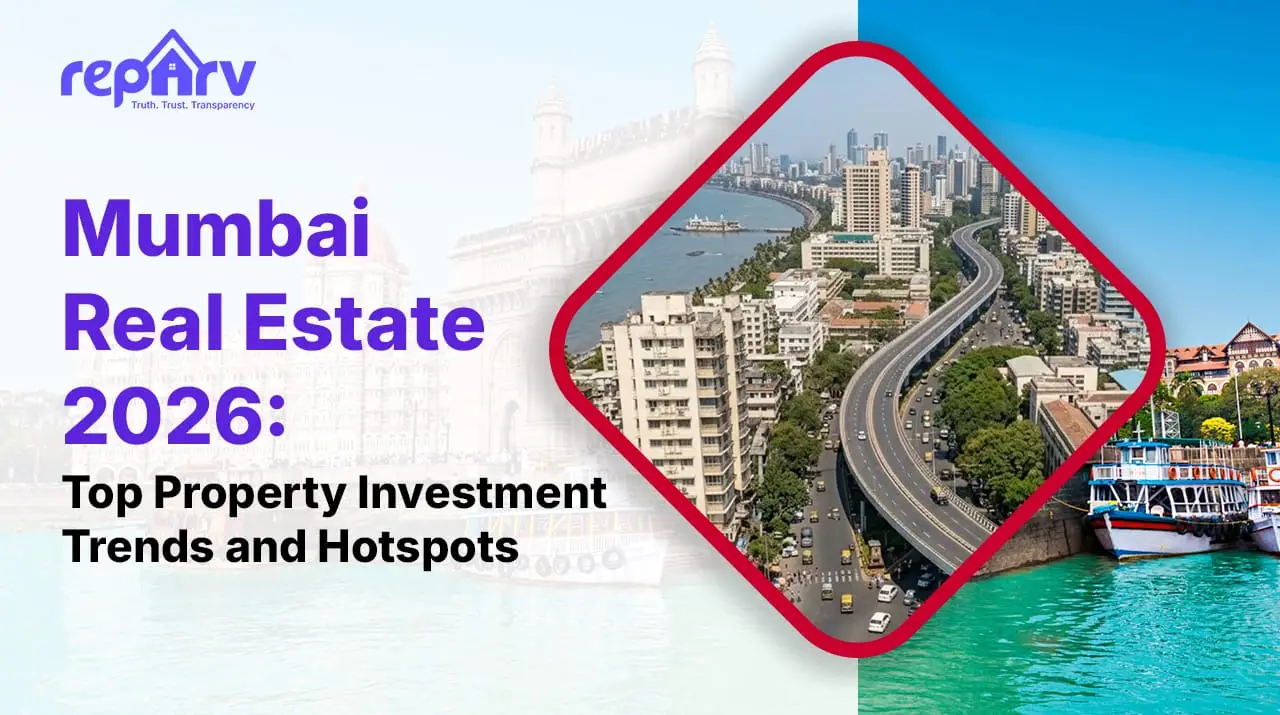
If you’ve lived in Mumbai long enough, you know the city doesn't just grow; it transforms. But even by Mumbai standards, 2026 feels different. We aren't just talking about a few new buildings here and there. We are witnessing a fundamental "re-mapping" of the city’s DNA.
The days when "prime location" was restricted to a few pin codes in South Mumbai or Bandra are fading. Thanks to a massive infrastructure overhaul, the Mumbai real estate market 2026 is more decentralized, more connected, and—for the first time in a decade offering genuine value to those who know where to look.
Whether you're a first-time homebuyer or a seasoned investor, understanding the property investment trends in Mumbai for this year requires looking past the glossy brochures. It’s about understanding how twenty minutes of saved commute time translates into lakhs of rupees in capital appreciation.
The "Infrastructure Premium": What’s Driving the Market?
In 2026, the single biggest driver of real estate appreciation in Mumbai is connectivity. Projects that were once "work in progress" signs on the highway are now operational, and they are changing the price tags of everything around them.
1. The Atal Setu (MTHL) Effect
The Mumbai Trans Harbour Link has done something people thought was impossible: it made Navi Mumbai an actual extension of the island city. Property prices in Navi Mumbai have seen a massive "structural re-rating." What used to be a 90-minute crawl is now a 20-minute breeze, making areas like Ulwe and Panvel viable primary residences for people working in BKC or South Mumbai.
2. The Metro Expansion (Line 3 and Line 4)
With Metro Line 3 (Aqua Line) fully operational, the "underground revolution" has stabilized rental yields in the western suburbs. Meanwhile, Metro Line 4 is doing the same for the Thane-Wadala corridor, turning the Eastern Express Highway into a high-demand residential belt.
3. Navi Mumbai International Airport (NMIA)
As the airport hits its stride in 2026, the "Aerocity" concept is no longer just a buzzword. We are seeing a surge in commercial real estate demand and high-end residential townships in the peripheral areas, as logistics and aviation professionals flood the zone.
Top Investment Hotspots in Mumbai for 2026
So, where should you actually put your money? Based on current data and absorption rates, here are the best areas to invest in Mumbai this year.
1. Panvel: The New Growth Capital
Panvel isn't just a "satellite town" anymore; it’s a self-sustained urban ecosystem. With the airport nearby and the MTHL providing a direct link to the heart of Mumbai, Panvel real estate is witnessing some of the highest ROIs in the MMR.
- Average Price: ₹10,000 – ₹15,000 per sq. ft.
- Growth Driver: Connectivity to NMIA and the Mumbai-Pune Expressway.
2. Chembur: The Strategic Mid-Point
Chembur has shed its industrial image to become a premium residential hub. It sits at the intersection of the Eastern Freeway, the Monorail, and the SCLR. It’s the perfect "balanced" play for those who want to be close to BKC without paying BKC prices.
- Average Price: ₹24,000 – ₹28,000 per sq. ft.
- Growth Driver: Proximity to major business districts and luxury redevelopment projects.
3. Thane (West): The Lifestyle Destination
Thane continues to dominate the mid-segment housing market. Its appeal lies in "liveability"—better air quality, planned greenery, and massive malls. The upcoming Green Line Metro and the Thane-Borivali Twin Tunnel projects are keeping the demand high.
- Average Price: ₹12,000 – ₹22,000 per sq. ft.
- Growth Driver: Integrated townships and superior social infrastructure.
4. Malad-Goregaon Belt: The IT and Media Hub
This area remains a favorite for young professionals. With the Coastal Road Phase 2 improving access to South Mumbai, the western suburbs have received a second wind. Ready-to-move flats in Malad are currently seeing a shortage due to high demand from the IT/ITES sector.
- Average Price: ₹22,000 – ₹32,000 per sq. ft.
2026 Property Price Trends: A Reality Check
Investors often ask: "Is the market overheated?" The short answer is no, but it is maturing. We are moving away from speculative "bubble" growth to infrastructure-led appreciation.
| Locality | 2026 Avg Price (per sq. ft.) | Expected Annual Growth |
|---|---|---|
| Bandra West | ₹55,000 - ₹65,000 | 5-7% (Stable/Luxury) |
| Andheri West | ₹28,000 - ₹40,000 | 8-10% (High Demand) |
| Kharghar | ₹14,000 - ₹19,000 | 10-12% (Emerging) |
| Mulund | ₹20,000 - ₹25,000 | 7-9% (Steady) |
| Ulwe | ₹9,500 - ₹13,000 | 12-15% (High ROI) |
Key Real Estate Trends to Watch in 2026
The Rise of Gated Communities and Townships
Post-2020, the "standalone building" is losing its charm. Buyers in 2026 are prioritizing integrated townships in areas like Thane and Navi Mumbai. People want "15-minute cities" where their gym, grocery store, and office are all within a short radius.
Luxury Redevelopment in South Mumbai
In the island city, where land is scarce, luxury redevelopment projects are the only way to get new inventory. Areas like Worli and Prabhadevi are seeing old chawls and societies being replaced by ultra-luxury towers with views of the Arabian Sea.
High Rental Yields in Metro Corridors
If you are looking for rental income in Mumbai, focus on properties within 500 meters of a Metro station. Data shows that "transit-oriented developments" command a 15-20% premium in rent compared to properties even just two kilometers away.
Expert Tips for Mumbai Property Buyers in 2026
- Look for RERA Compliance: This is non-negotiable. Always verify the MahaRERA registration and the developer’s track record for project completion.
- The "20-Minute Rule": Before buying, test the commute during peak hours. If the new infrastructure doesn't actually save you time, the "appreciation" might just be marketing hype.
- Focus on Occupation Certificate (OC): In 2026, the market prefers ready-to-move properties. Avoid under-construction projects unless they are from "Tier-1" developers with a history of on-time delivery.
- Don't Ignore Peripheral Areas: Places like Kalyan, Dombivli, and Vasai-Virar are no longer just for low-income housing. With the Virar-Alibaug Multimodal Corridor, these are becoming serious investment contenders for long-term holds.
Conclusion: Is 2026 the Right Time to Buy?
The Mumbai real estate market 2026 is at a sweet spot. The massive infrastructure projects that were "promised" for a decade are finally operational. This has removed the "execution risk" for many investors. While prices have risen, the increase is backed by actual utility and improved quality of life.
If you’re looking for quick, speculative flips, those days might be gone. But if you’re looking for long-term wealth creation and a home in a city that is finally fixing its commute problem, there hasn't been a better time in the last decade to enter the Mumbai market.